
The Bombay High Court Has Spoken: Is Your Airbnb "Legal" ?
Thinking of listing that spare room on Airbnb for a little extra income? You might want to hold that thought. The Bombay High Court, in a series of recent rulings, has fundamentally changed the rules of the game for short-term rentals in Mumbai, and the conclusion is clear: Airbnb is not a simple "Paying Guest" arrangement; it is a commercial activity akin to running a hotel.
3/27/20263 min read
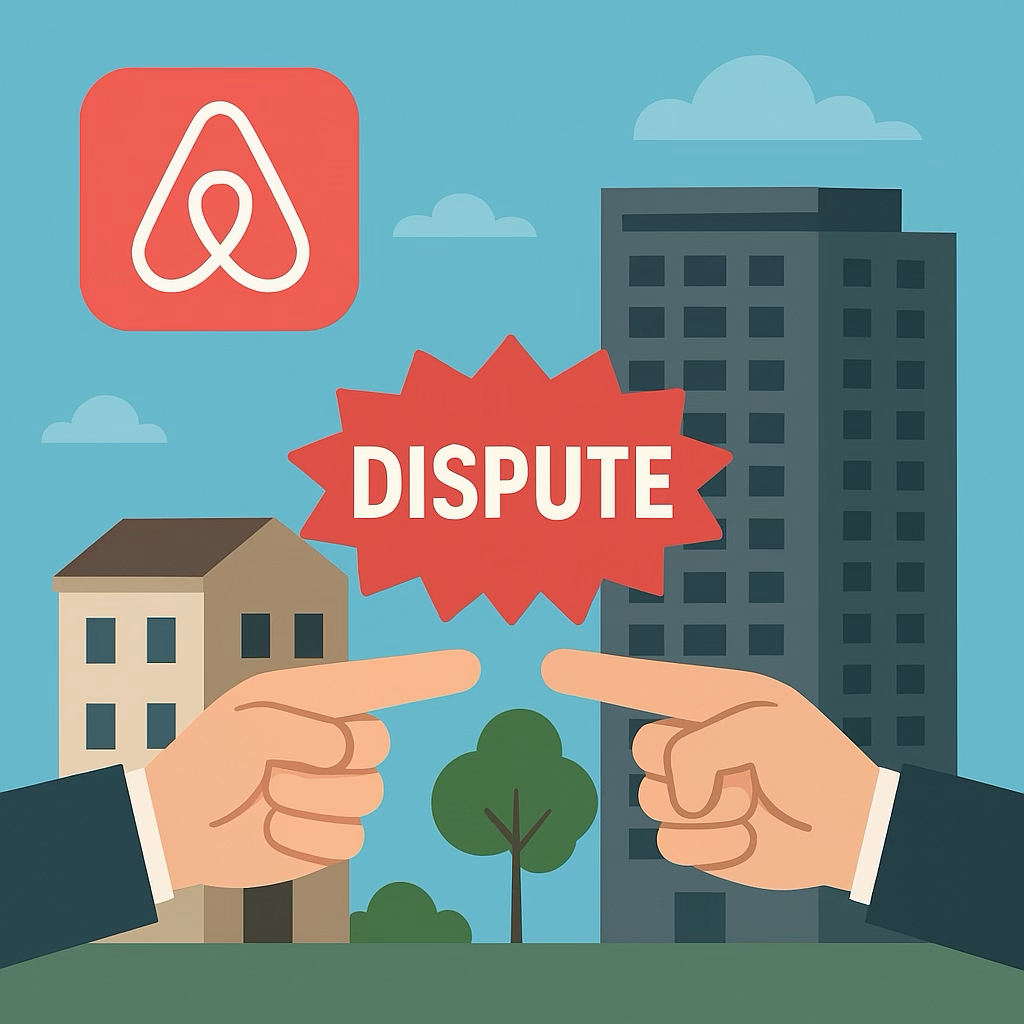
Thinking of listing that spare room on Airbnb for a little extra income? You might want to hold that thought. The Bombay High Court, in a series of recent rulings, has fundamentally changed the rules of the game for short-term rentals in Mumbai, and the conclusion is clear: Airbnb is not a simple "Paying Guest" arrangement; it is a commercial activity akin to running a hotel.
This landmark shift in legal interpretation has profound implications for hosts, travelers, and, most importantly, Cooperative Housing Societies (CHS). For a long time, the status of Airbnb in Mumbai was a grey area. Societies struggled to stop members from using their residential apartments for commercial purposes, often arguing about security, nuisance, and the commercial exploitation of residential space.
The Court's Verdict: No Middle Ground
The Bombay High Court has now removed any room for ambiguity. Key judgments, including Mahesh K. Mehta vs. Bharatiya Friend’s CHS, have established that the frequent, short-term commercial use of a residential unit as a lodging house constitutes a violation of the property’s residential nature.
Essentially, the Court has ruled that:
Airbnb is a Commercial Venture: The regular leasing of an apartment to strangers for short periods (days or weeks) for profit is a business activity, not a residential use.
A Kin to a Hotel: The operations—the transient nature of the guests, the regular check-ins and check-outs, and the monetization of the space—make it function like a hotel or lodging house, which requires specific licensing and approvals.
Society's Authority is Paramount: In the Mahesh Mehta case, the Court upheld the absolute authority of a Cooperative Housing Society’s General Body to pass resolutions prohibiting Airbnb-style rentals. If the society decides that the influx of unknown guests compromises the collective interest and security of its permanent residents, they have the legal right to ban it, even if the individual unit owner objects.
The Death of the "PG" Argument
For years, some hosts in Mumbai tried to frame their Airbnb listings as equivalent to a Paying Guest (PG) arrangement to avoid taxes, licensing requirements, and society interference. The High Court has now decisively closed this loophole.
There is a stark difference, the Court and subsequent regulatory bodies have clarified:
Paying Guests: This is generally viewed as a residential arrangement. PG agreements (often in the form of a Leave and License) are usually long-term (e.g., for students or young working professionals for several months). The goal is to provide a home-like environment, and it does not typically attract a different, transient crowd every few days.
Airbnb/Short-Term Rentals: This is now firmly classified as commercial/lodging. The duration is very short-term. The aim is commercial profit through daily/weekly turnover, and it turns a residential building into a transient space, similar to a hotel.
What Does This Mean for Mumbai Hosts in 2026?
If you are a host in Mumbai, the implication of this ruling, combined with the BMC’s stringent new licensing policy, means you must stop operating immediately unless you meet very specific criteria.
Here is what is now legally required to run an STR in Mumbai:
Mandatory BMC License: It is no longer optional. You must obtain a license from the Medical Officer of Health (MOH) of the BMC, just like any other lodging establishment.
Society NOC is Non-Negotiable: You absolutely cannot get a BMC license without a fresh No Objection Certificate (NOC) specifically for commercial, short-term rental use from your CHS. Given the recent court rulings, very few societies are likely to grant this.
Registration with the Directorate of Tourism: You must register your unit as a Bed & Breakfast (B&B) or Homestay.
Police Intimation: Mandatory guest details must be submitted for every guest.
Risk of Heavy Penalties: The days of flying under the radar are over. The BMC is aggressively enforcing these rules. Violators risk massive fines, up to 50% to 100% of their total revenue generated from the unlicensed rentals.
The Future for Societies
This verdict is a major victory for Cooperative Housing Societies that have long sought to protect the residential integrity and security of their premises. Societies in Mumbai are now empowered to:
Pass Explicit Bans: Societies can, by a majority vote in their General Body Meeting, explicitly update their bye-laws to ban Airbnb or any form of short-term rental.
Enforce These Bans: The courts will uphold these society decisions, and any member continuing to host will be in direct violation, facing potential legal action and eviction.
The Takeaway
The Bombay High Court has clarified that a residential society is just that—residential. It is not a marketplace for transient lodging. The "verdict on Airbnb" is that it must operate with the same transparency and regulatory compliance as a hotel, and that power fundamentally lies with the collective body of residents to decide if that is acceptable in their homes.
Litigation
Experts in civil, criminal, and tax law.
Services
Contact
mail@janakco.in
© 2025. All rights reserved.